

Elastic Gore
August 24, 2024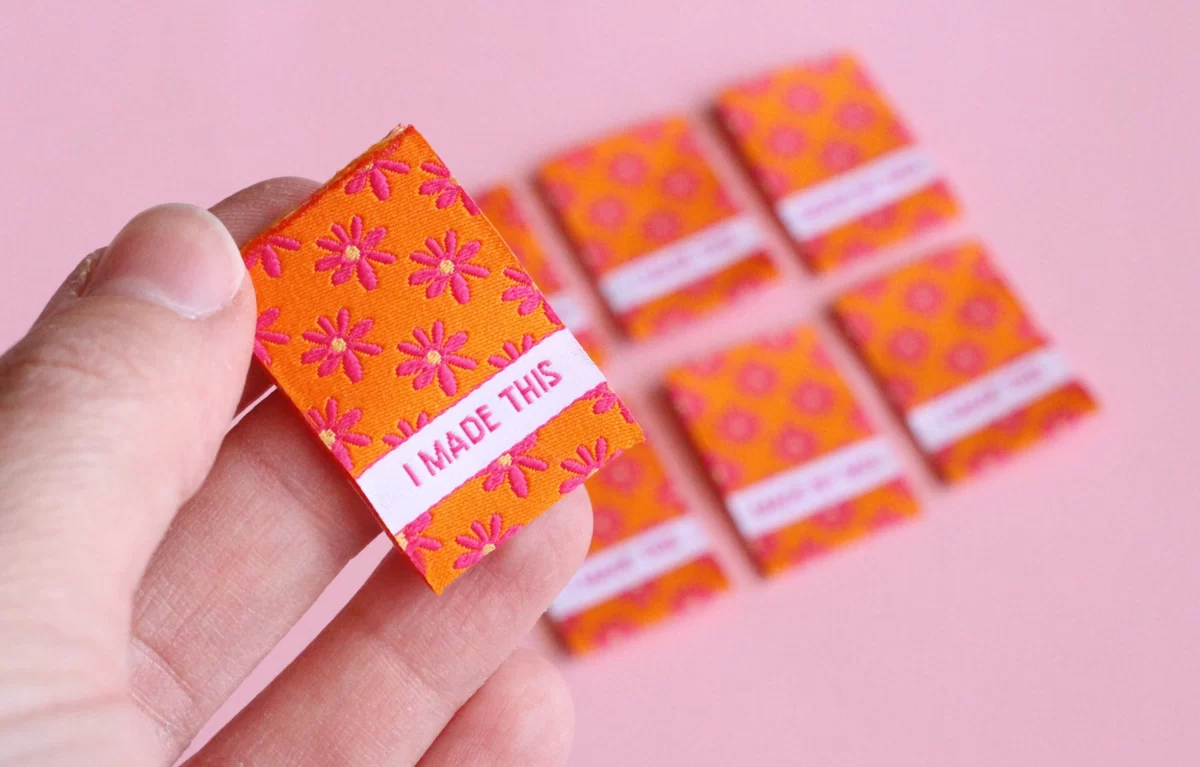
Manufacturer of all kinds of clothing labels
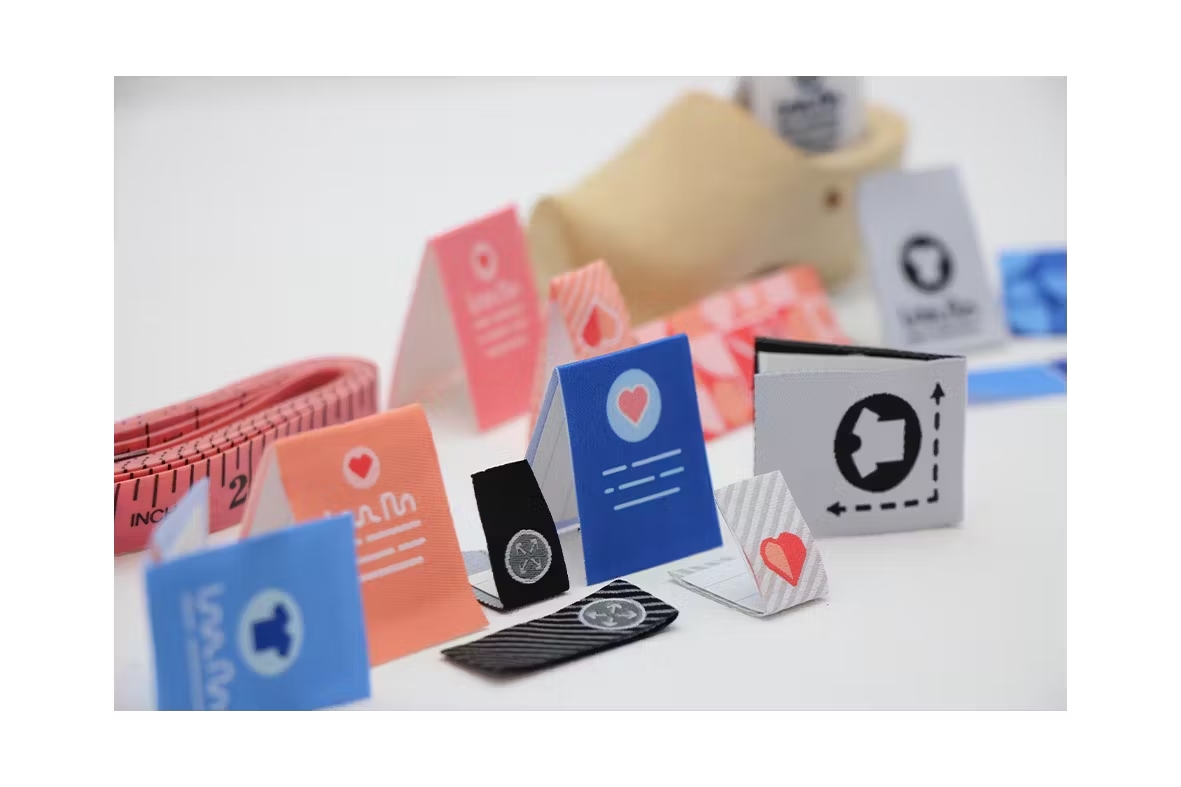
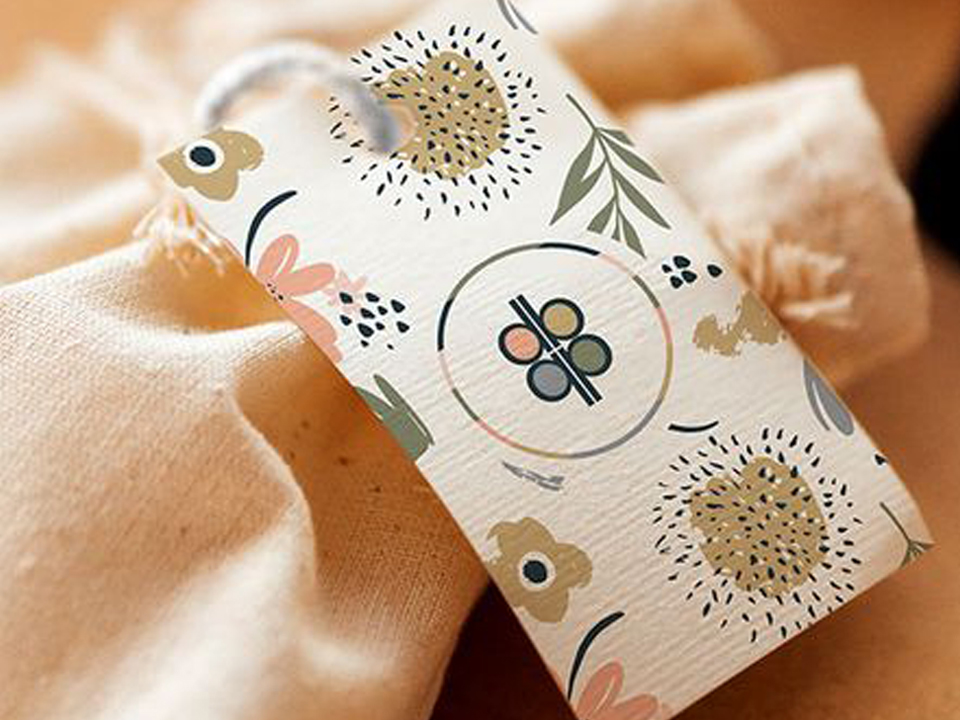
A clothing label is one of the essential components for every tailor, garment workshop, and any product that requires a hang tag. At the Vakili Textile specialized production unit, labels are manufactured in a variety of colors, elegant cuts, and different materials, and offered to customers with high quality. Online ordering of hang labels with all types of finishes is available directly through our website.
Main Applications of Clothing Labels
Clothing labels are used across a wide range of products such as apparel (back neckline of coats, shirts, T-shirts), bags and shoes, scarves, overcoats, blouses, furniture, cushions, kitchen sets, bedding, and more.
Because of their durability, wash resistance, and the beauty they add to products, woven labels are widely used in items such as: back-neck labels for coats, fold-in labels inside pockets, furniture and cushion folded labels, scarf labels, children’s clothing tags, and various accessories such as hats and gloves.
Why Are Clothing Labels Essential for Brands?
In the world of fashion, small details create major differences. One of these frequently overlooked elements is the clothing label. Although many see it as just a simple tag, in reality, a label plays a crucial role in brand presentation, communicating essential information, and shaping customer experience.
In this article, we explore different types of clothing labels, their applications, and their importance for garment manufacturers.
What Is a Clothing Label?
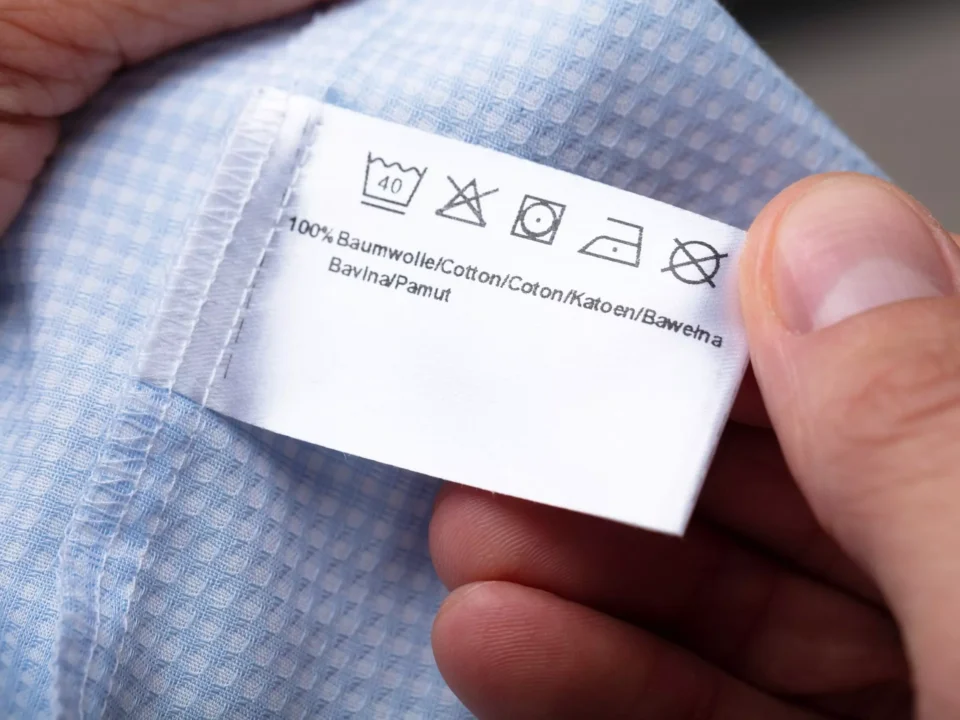
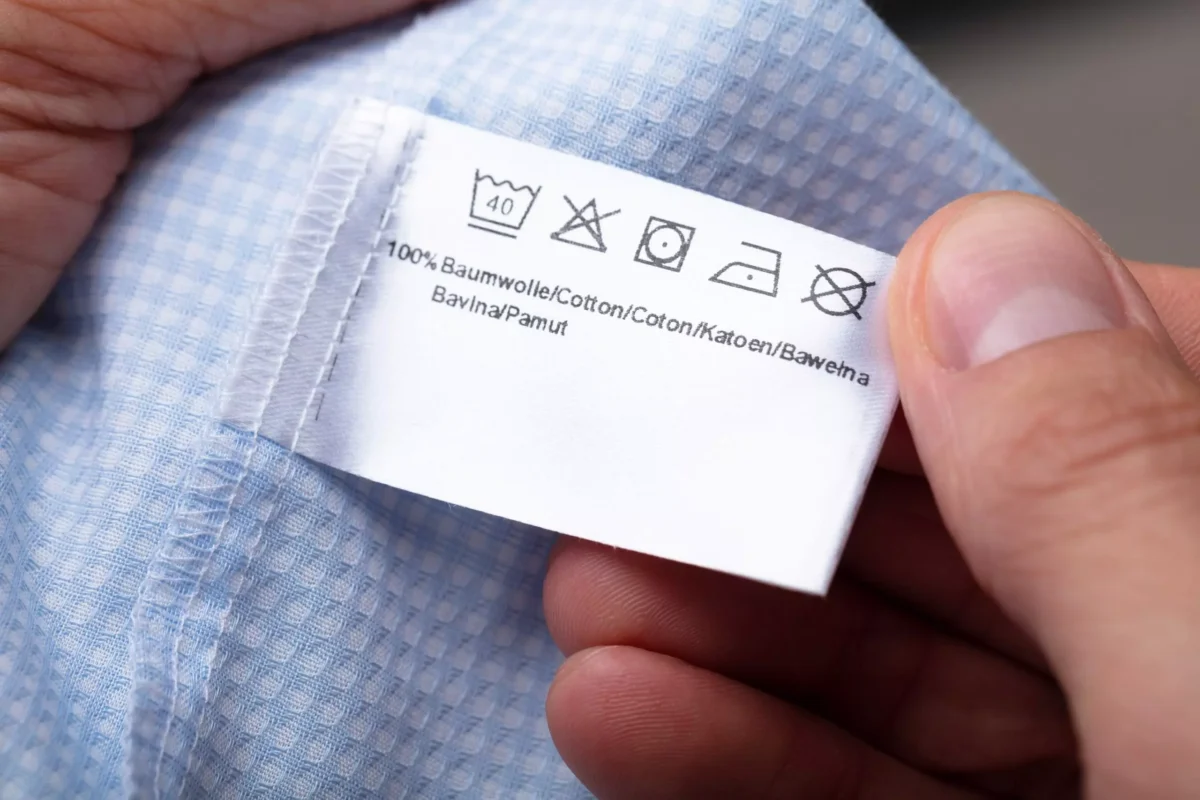
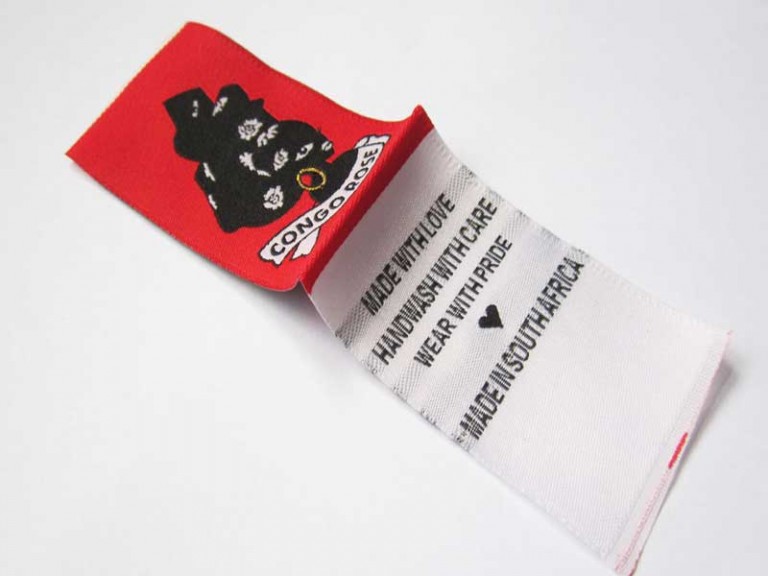
A clothing label is a small piece of fabric or material sewn or attached to garments that provides information such as the brand name, size, washing instructions, country of origin, and fabric composition. These details may be printed or woven.
You can explore more detailed information about clothing labels in this article.
Why Are Clothing Labels Important?
A clothing label is not just an informational tool — it is one of the most important branding elements of your product.
Imagine a customer who likes a garment in a store. When they look at the label and see that it is professionally designed, clear, and high-quality, they immediately form a positive impression of the brand.
But what happens if the label is missing or poorly made?
The chance of purchase significantly decreases.
The Role of Labels in Customer Experience
Customers notice the garment’s appearance first, but when they decide to buy, they look for information such as accurate sizing, washing instructions, and place of manufacturing.
If these details are missing or unclear, it may lead to dissatisfaction or even product returns.
Therefore, a good label plays a key role in maintaining customer trust.
Types of Clothing Labels and Their Features
Depending on the garment and the brand’s needs, there are several types of labels, each with unique characteristics:
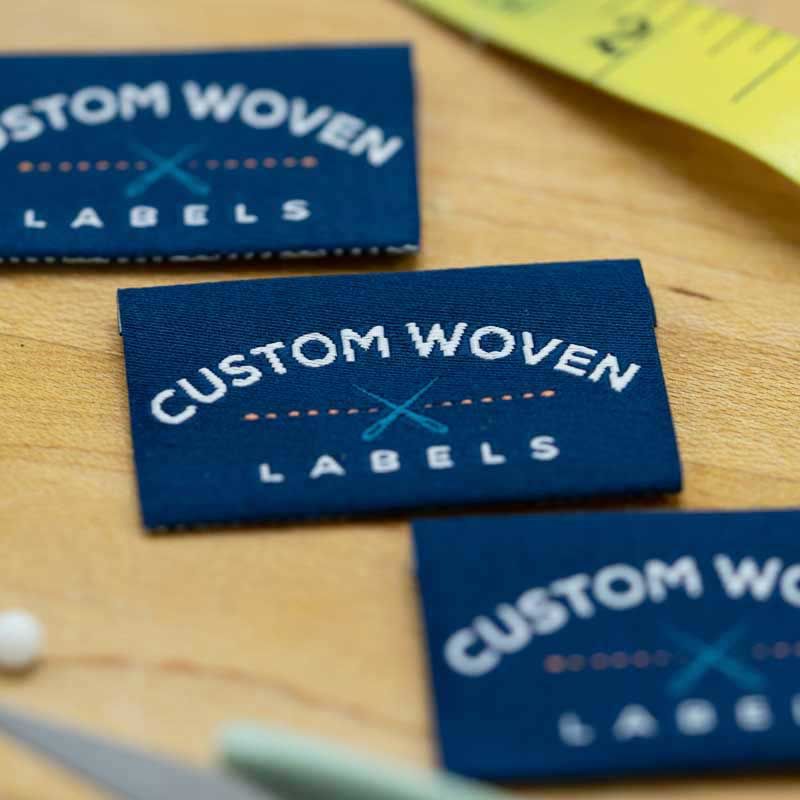
1. Woven Labels
Made from polyester or nylon threads.
-
High durability
-
Professional appearance
-
Excellent for premium brands
2. Printed Labels
The information is printed on soft materials like satin or cotton.
-
Lower production cost
-
Faster to produce
-
Comfortable for sensitive skin
3. Damask Labels
Made with finer threads and capable of displaying detailed designs.
Great for brands with intricate logos.
4. Neck Labels & Side Labels
Based on placement:
-
Neck labels: brand identity
-
Side labels: care instructions and material composition
Essential Information to Include on a Label
A professional label should contain valuable and practical details such as:
-
Brand name – the core identity of the product
-
Size – S, M, L or numerical sizing
-
Fabric composition – e.g., 100% cotton or 70% polyester, 30% viscose
-
Care and washing symbols – ironing temperature, hand wash/machine wash
-
Country of origin – Made in Iran, Turkey, China, etc.
-
QR code or brand website (optional)
The Impact of Labels on Branding and Marketing
A high-quality label does more than provide information; it communicates the brand’s personality. Fonts, colors, material, and placement should match the brand’s visual identity.
Some luxury brands even use specially crafted or handmade labels to create a sense of exclusivity.
How to Design a Standard and Professional Label
If you are a garment manufacturer, pay attention to the following points:
-
Readability: text size and clarity
-
Wash resistance: labels should not fade or fray
-
Skin-friendly materials: especially for baby clothing
-
Color coordination: choose colors that harmonize with the garment
-
Proper attachment: neat and secure stitching
Choosing the Right Label Manufacturer
Just as design is important, so is label production quality.
Vakili Textile is a trusted manufacturer of high-quality clothing labels. Contact us for ordering or price inquiries.
At Vakili Textile, we offer custom designs based on your brand’s needs. We use high-quality, non-irritating materials to ensure the best performance.
As a leading label producer, we deliver orders on time with precise workmanship, and we support high-volume production for manufacturers.
In conclusion, a clothing label is much more than a simple tag — it can enhance brand recognition, communicate essential details, and elevate the customer’s experience. If you aim to build a strong brand, increase customer trust, and compete in the clothing market, never overlook the importance of professional label design and production.
Just like garment design, label design is an essential part of your brand’s success.
Purchase wholesale of Clothing Labels from Vakili Textile
Clothing label at Vakili Textile are produced using professional machinery and meticulous craftsmanship to ensure customer satisfaction.
Entrust your woven fabric labels to us for premium quality and fair pricing. Our services come with quality assurance.
We produce and supply various labels including suit labels, women’s and children’s clothing labels, woven labels, hang tags, and more.
For more information DO NOT hesitate to Contact Us! Our sale Unit help you to choose best clothing labels.