

A complete guide to choosing best clothing labels
April 29, 2025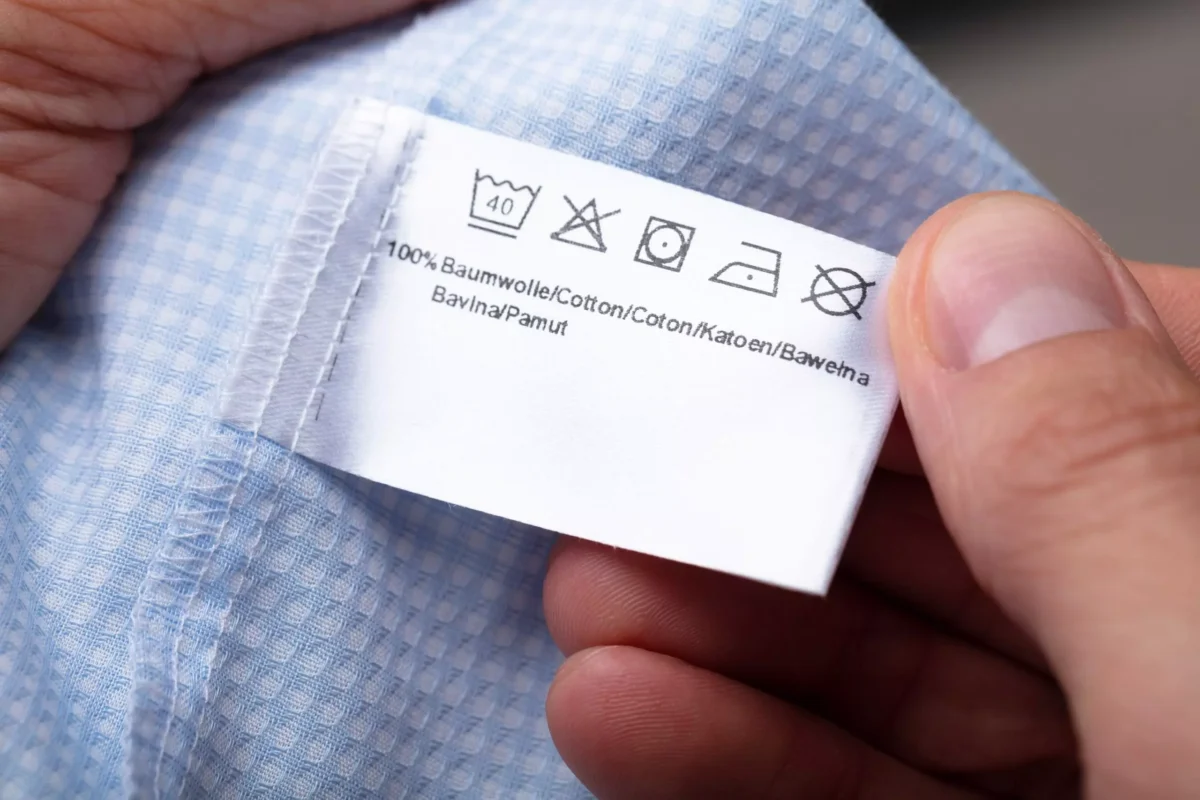
Different types of clothing Label and their uses
As we all know, clothing labels are an essential part of clothing accessories. Clothing labels are not just a piece of cloth. They can record the brand logo, clothing size, ingredient list and country of origin, manufacturer, and care instructions, among other things.
Many customers make their purchasing decisions based on clothing labels. As a result, product labels are very important for sales. Moreover, in this article, we have compiled four different types of clothing labels.
Classification of Clothing Labels by Material
Metal Labels
Metal labels are accessories that can be engraved with brand logos for clothing, hats and bags.
Aluminum labels, stainless steel labels, silver labels, copper or brass labels, zinc alloy labels, etc. are all examples of metal labels. Metal labels are widely used and processes include stamping, printing and laser cutting, etc.
Leather Labels
Leather labels are one of the different types of labels made of leather. They are also called leather labels or leather patches. Synthetic (PU), genuine (real) and suede (microfiber) leather labels are available.
These labels are great for jackets, jeans, hats and bags and more. You can use printing, embossing or gold/silver hot stamping to add personalized logos and metal labels to any leather label. Sewing, ironing, gluing or adhesive tape are all options for adding.
PVC Labels (Rubber, Silicone)
PVC labels are made of flexible PVC rubber. Its full name is polyvinyl chloride. Rubber labels are composed of PVC and silicone. They are also a special sewing label and patch for clothing such as jackets, bags, hats, canvas and outdoor gear.
Company logo can be added to most PVC labels to make them stand out. As a result, you can sew on adhesive, sticky and soft magnetic backing. However, stick this model in your own unique way.
Fabric Labels
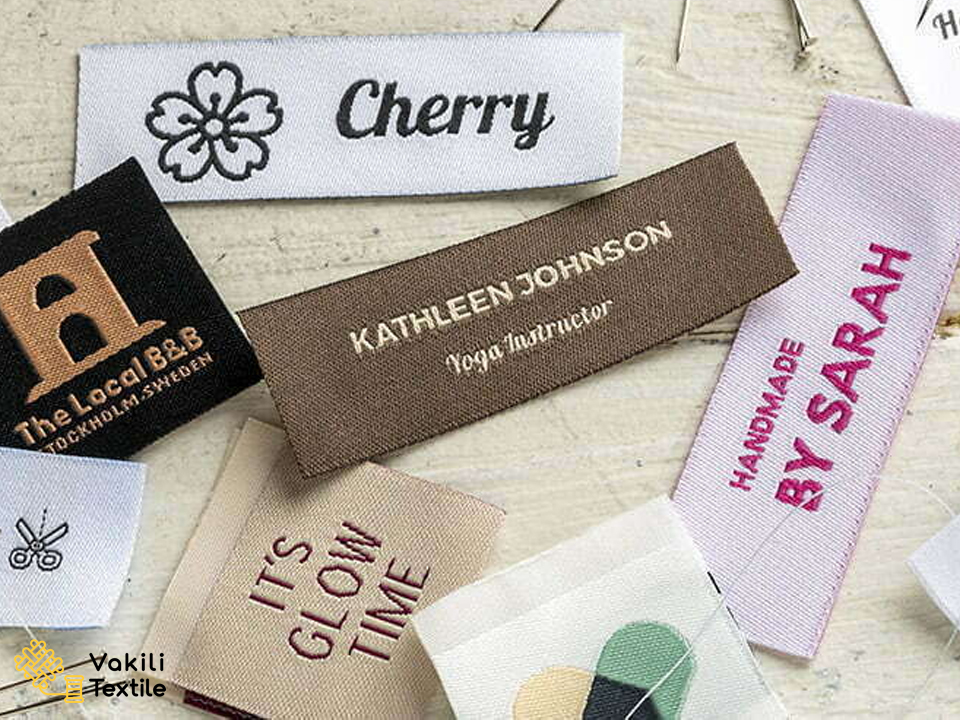
Fabric labels are made of durable and soft fabrics, including woven and printed fabric labels.
Satin, nylon, taffeta, polyester, tape, ribbon, non-woven fabric, and cotton fabric are used. As a result, these types of labels are perfect for T-shirts, jackets, shirts, pants, and children's clothing.
TPU Labels
TPU labels, also known as transparent clothing labels, are soft and thin labels that are printed with logos on rubber-like materials. TPU (thermoplastic polyurethane) is their main material. As a result, it is more environmentally friendly than silicone and PVC.
Classification of clothing labels by function
Main label
Every garment must have a main clothing label. A main label is a woven, printed, heat-transferred or leather method of adding a logo and brand name to the fabric. It is usually located under the inner collar and back of the garment or on the inner seam and back of the garment.
Care labels
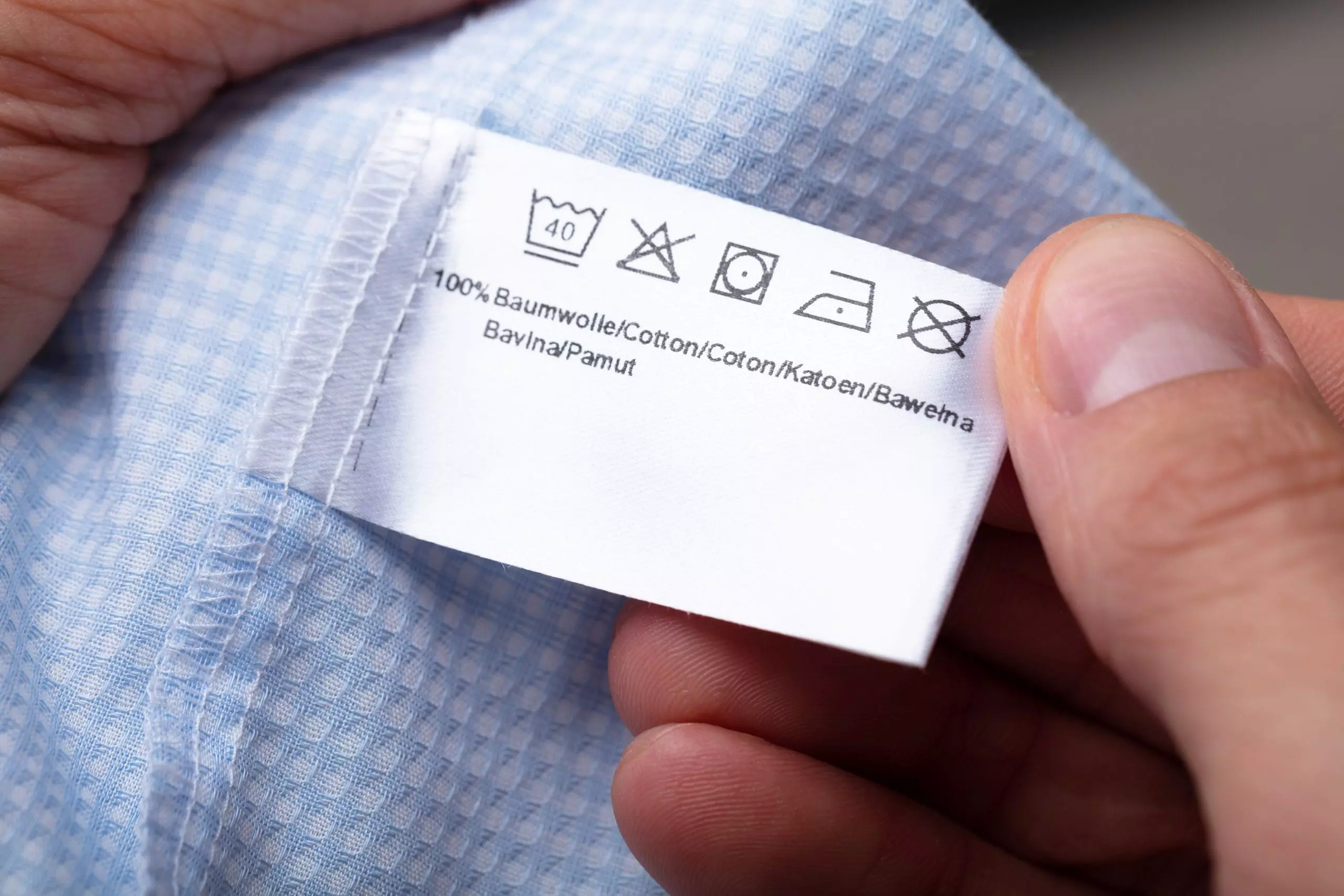
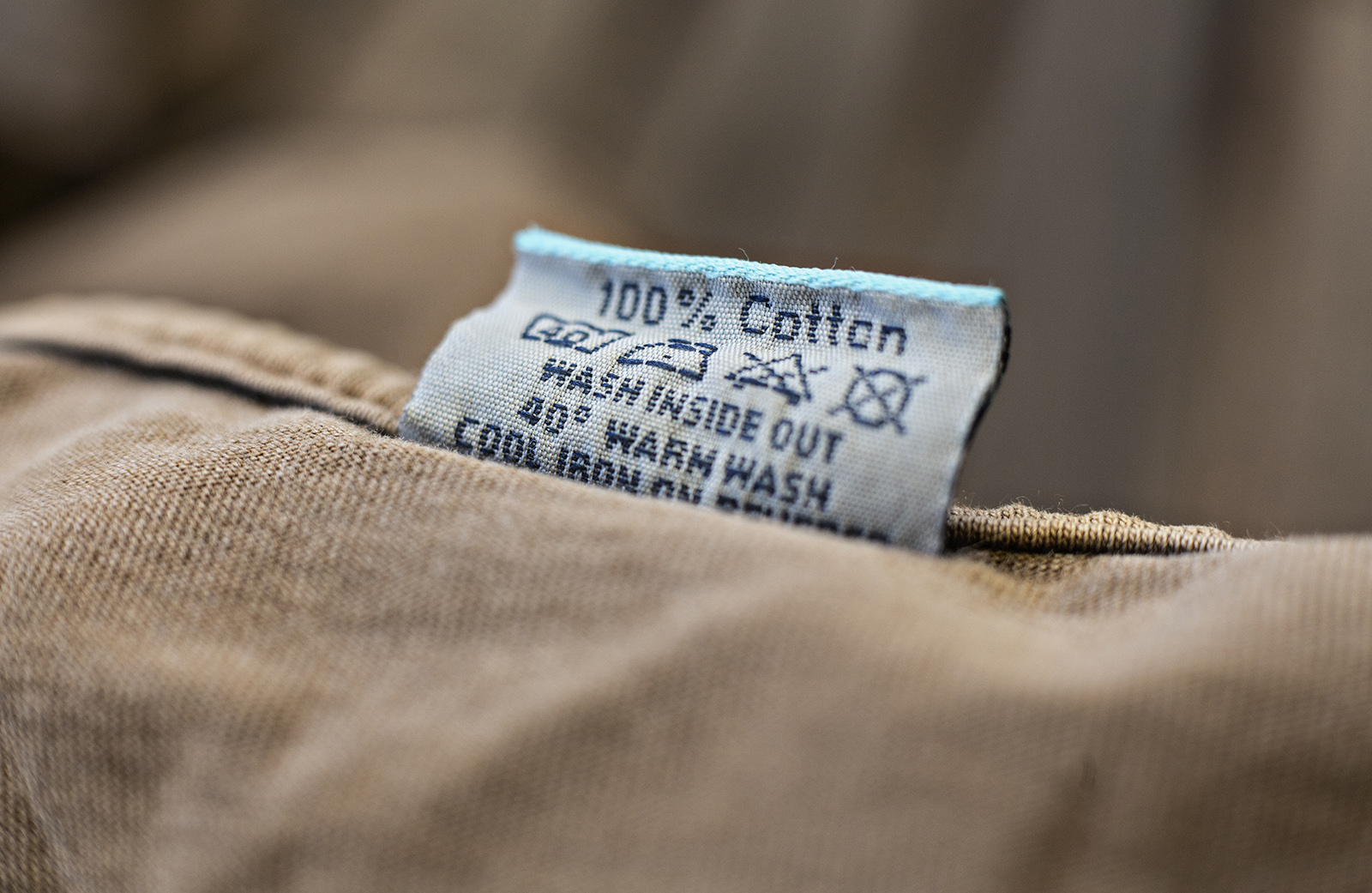
Care labels are clothing wash labels and care symbols that specify the fabric composition, clothing care information and appropriate washing methods.
Generally, factories or brands include washing instructions and the company's logo and size on the labels. To learn about washing symbols, check out the article A detailed guide to laundry symbols on clothing labels.
Clothing size labels
Clothing labels that print or weave a specific size onto the garment are known as size labels. Sizes for clothing, bedding, shoes and bags include S, M, L and XL. You can also check the exact sizing in this article.
Printed and woven size labels are two types of size labels. Polyester and cotton, satin, nylon and other materials are used. Laser cutting or hot cutting methods are used to cut the label. While shopping, the first thing they do is check the size of the garment to determine whether it is suitable for them or not.
Hang tags
Hang tags are garment swing tags that print brand logos or product information on paper, plastic, metal, leather or fabric - price, care symbols, contact information, social media or website links, brand stories, etc.
A brief description and design of the products are printed on the labels. As a hang tag, some certificates are attached to the products.
Flag Labels
Small clothing labels are attached to the outside of fabrics, garments, bedding and other items.
They usually have a brand logo and company name printed or woven on them to identify where it belongs.
Classification by sewing methods
Iron-on labels
Iron-on labels have a heat-transfer adhesive that can be removed and ironed onto fabrics. This type of label is waterproof, durable and skin-friendly.
As a result, they are great for shirts, T-shirts, pants, uniforms and more. These labels can be printed with personalized logos and brand names, contact information, websites or care symbols and more.
Heat transfer labels
Heat transfer labels are basic clothing labels that heat-press a logo or design onto special transfer paper, synthetic film or plastic film. Then, peel off the film and stick it on your desired fabric. These types of labels are ideal for t-shirts.
Sew-on labels
Sewn labels are a type of clothing label that can be sewn onto any fabric. On the other hand, their edges usually have grooves and holes that can be sewn into them.
Sew-on labels include any sewn-on label that can be used for sewing. Some examples include woven labels, printed labels, leather, fabric, PVC, and metal labels.
Metal labels with rivets and bendable bases
Metal labels can be attached in two ways. Use a bendable base or rivets to attach it. Customers usually have two options when customizing metal labels for clothing, hats, bags, and other items. They are also easy to add to items.
Classification by Production Process
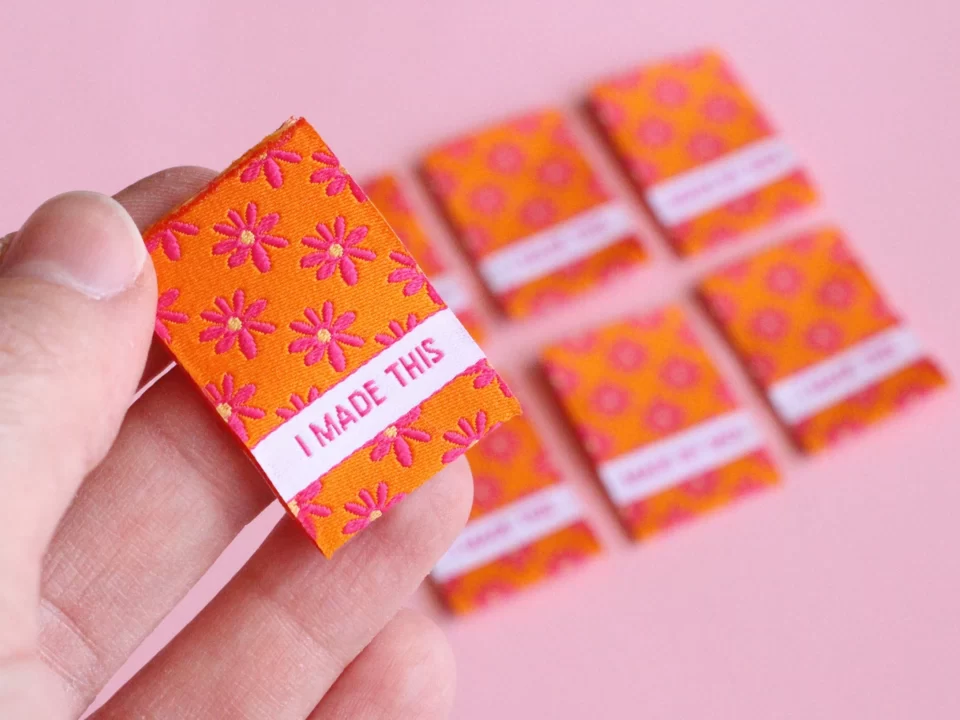
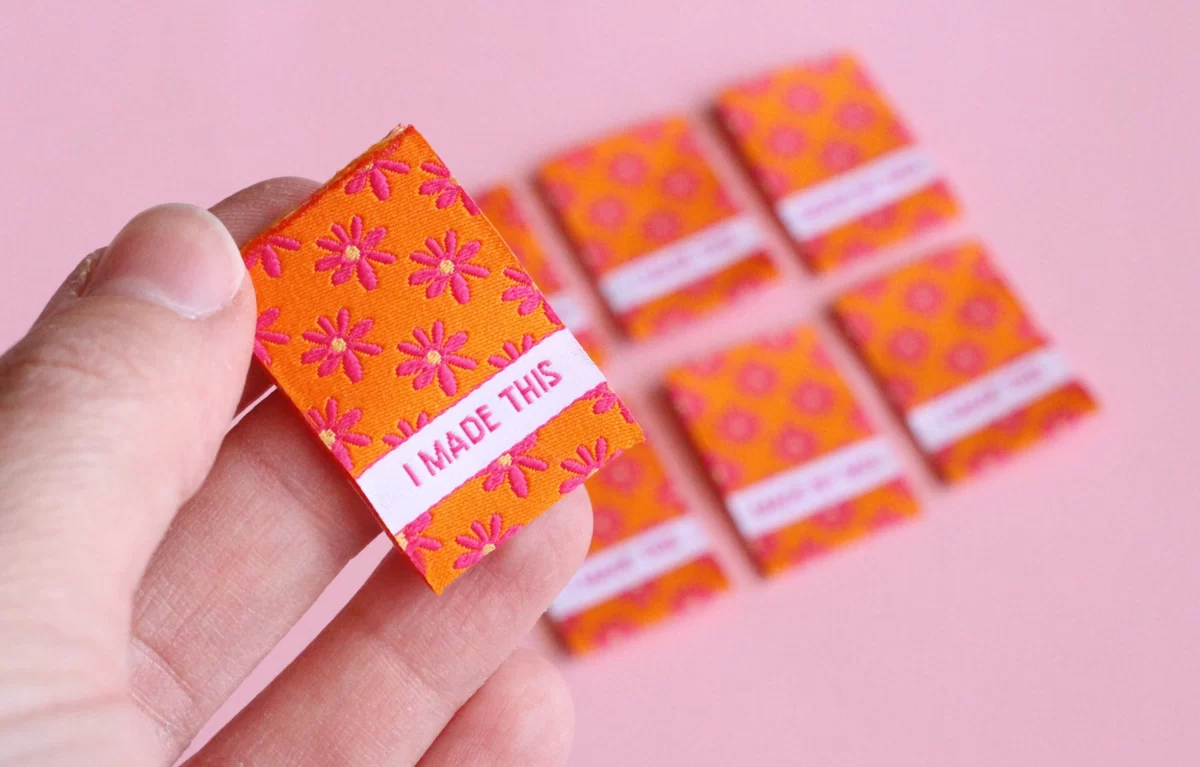
Woven Labels
Woven labels, woven from fabrics such as damask, polyester, satin, taffeta and cotton, are the main labels for clothing brands.
Labels come in a variety of shapes and sizes. Cotton woven labels, fringe woven labels, damask woven labels, satin woven labels, crochet woven labels and iron-on woven labels are examples of woven labels.
Printed Labels
Printed labels are often found inside clothing labels and are used to print logos, product information, company name, contact information and website links to enhance brand image.
TPU, ribbon, cotton, satin, nylon, polyester, taffeta, canvas, tape and leather are among their materials. They come in various shapes and sizes, including care or washing labels, size labels, etc.
Heat-stamped leather labels
Most leather labels are made by hot pressing (high temperature and timed ironing). There are also high-frequency voltage methods, silkscreen printing, laser, sewing, embroidery, hardware, etc. Heat-stamped leather labels are usually found on the back of jeans, but they can also be found on bags, handbags, shoes and hats.
First-layer leather, second-layer leather, microfiber leather, synthetic leather (PU and PVC) and artificial leather are among the materials that make up the product. Leather labels can be attached to items using 3M adhesive, Velcro, punching, perforation, etc. As a result, they are suitable for clothing, home furnishings, and other applications.
Die-cast and PVC Metal Labels
Stamping and die-casting are commonly used on metal labels and some PVC labels. These methods are effective methods for label production. Any product can be protected from oxidation and fading by plating and enameling, as the final products will be durable and smooth.
Embroidered Labels
Embroidered labels are a garment design that is made up of overlapping thread stitches. Flat labels, 3D labels, towel labels, sequin labels, fabric labels, brush labels, hand-beaded labels, mixed embroidery, etc. are the most common types of embroidery labels. The following methods can be used to add backing to embroidered labels:
Bags, hats, jackets and other items with iron-on backing. Sewing: Attaching garments to machines for long-term use. Clothes with adhesive backing are ideal for short-term use. Puffer jackets, coats and other items with adhesive backing (hook and loop) are easy to put on and take off.
High Frequency Labels
A high frequency label uses high frequency skills to fuse silicone/PVC materials into felt fabric. Felt label is another name for it. This label can also be used for a variety of purposes. Clothing, gifts, toys, shoes, bows and decorative ribbons are just a few examples.
Frequently Asked Questions
What are brand labels?
A brand label is a small piece of fabric that displays your company or personal information and is most commonly found on clothing labels. However, it can also be found on a variety of other products. You can include something as simple as a logo or a few phrases or more information such as website information, slogan, simple washing instructions or more.
Labels are about expressing a distinct identity and differentiating a product from its competitors. Companies that want to express their brand identity should use branded labels. The more complex your design, the larger the label should be, increasing your production costs.
What do your branded labels mean to you?
Custom branded labels give your product a distinct identity that sets it apart from the competition. When designing your products, the most important factor is your brand identity. What are your credentials? What exactly do you do? What is your company ethos? Who is your target market? Your custom brand logo and description can answer these questions.
Your brand identity convinces customers that your product is right for them. Branded labels are the best way to visually express your brand identity. Products without branded labels look amateurish and unprofessional. Choosing to use custom branded labels for your company can help you stand out from the crowd and make your product easily identifiable.
Which regulatory bodies are responsible for clothing labels?
The European Commission is responsible for textile and clothing labels in the European Union, but member states may have their own labeling requirements. In the United Kingdom, the Department for Business, Energy and Industrial Strategy is responsible for developing and enforcing textile labeling regulations. However, local law enforcement agencies may be responsible for enforcing these laws in some cases.
Conclusion:
Clothing labels are an essential implementation in the clothing industry, which, in addition to displaying the brand, also contains important information. Using high-quality, durable, and well-designed clothing labels shows the professionalism of the manufacturer and increases customer trust. If you are looking for durable and customized clothing labels for clothing, you can visit Vakili Textile and benefit from our specialized services in the field of producing various types of clothing labels.